
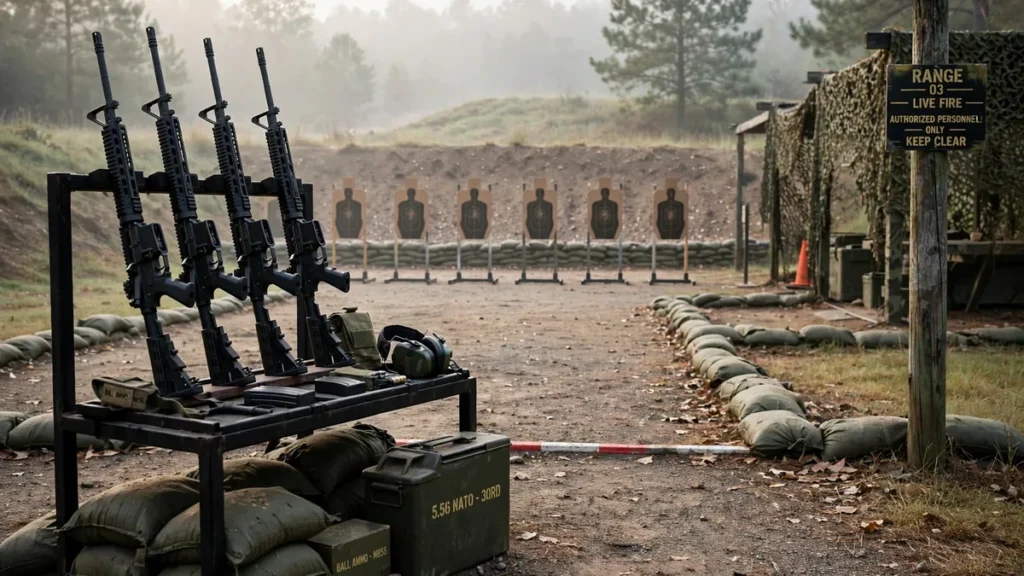
The 30-Minute BGMI Training Ground Routine That Actually Improves Aim (2026)
TL;DR: Random mag dumps don’t build aim — structured minutes do. This 30-minute routine splits practice into five blocks: 5 min warmup tracking, 10 min spray control, 5 min peek-and-crouch drills, 5 min long-range taps, and 5 min movement and jump shots. Measure your spray group size on a wall weekly, and you’ll see real improvement in 2–3 weeks.
Table of Contents
- Why Most Training Ground Time Is Wasted
- The 30-Minute Routine at a Glance
- Block 1 – Warmup Tracking (0:00–5:00)
- Block 2 – Spray Control (5:00–15:00)
- Block 3 – Peek and Crouch Drills (15:00–20:00)
- Block 4 – Long-Range Taps (20:00–25:00)
- Block 5 – Movement and Jump Shots (25:00–30:00)
- How to Measure Progress
- Weekly Progression Plan
- What NOT to Practice
- FAQs
Someone spends an hour daily in the training ground and still loses every close fight; someone else plays half as much and hits Ace. The difference isn’t talent — it’s structure. Here’s a complete 30-minute routine: short enough for daily use before ranked, focused enough that every minute has a purpose.
Why Most Training Ground Time Is Wasted
Visit the training ground any evening and you’ll see it: players standing still, holding fire, watching the M416 spray-paint the wall. It feels productive — fingers moving, dummies falling. But you’re mostly training one skill: holding fire while pulling down.
Real fights don’t look like that. Real fights mean a moving enemy, you moving too, peeking from cover, crouching mid-spray, switching between tap-fire and full auto by distance. If practice never includes those elements, it’s just expensive target practice with free ammo.
The second problem: no feedback loop. You spray, it looks messy, you spray again, slightly less messy, and you leave feeling vaguely better — with no way to tell improvement from warmup.
The 30-Minute Routine at a Glance
One rule on loadout: practice with guns you actually pick up. For most players that’s an AR (M416 or Scar-L) plus a flex slot — AKM, UMP45, whatever you run second. Don’t drill the AWM if you never touch one.
| Time | Block | Focus |
|---|---|---|
| 0:00–5:00 | Warmup Tracking | Smooth crosshair movement |
| 5:00–15:00 | Spray Control | Two weapons, recoil patterns |
| 15:00–20:00 | Peek + Crouch Drills | Lean peeks, crouch-spray bursts |
| 20:00–25:00 | Long-Range Taps | Single-fire accuracy at 100m+ |
| 25:00–30:00 | Movement + Jump Shots | Strafing, jumping, shooting on the move |
Set a timer. When a block ends, move on — even mid-flow. Discipline is the whole point.
Block 1 – Warmup Tracking (0:00–5:00)
Start cold, and fire nothing for the first two minutes. Pick a moving target at mid-range and follow it with your crosshair, keeping it centered. This wakes up hand-eye coordination and tells you how your sensitivity feels today — stiff thumbs, a slippery screen, all of it shows up here.
For the last three minutes, add firing: track the moving target while shooting short bursts. Don’t obsess over recoil yet. The goal is smooth, glued-on tracking — the skill behind those clips of someone beaming a player sprinting across a field. It starts here, boring and bullet-free.
Block 2 – Spray Control (5:00–15:00)
The core of the routine. Pick two weapons — main AR and secondary — five minutes each.
Stand 20–30m from a flat wall and empty a mag into it without correcting your aim. Study the bullet-hole pattern: that’s the weapon’s recoil signature, climbing up and drifting sideways. Now repeat, pulling your aim down and against the drift to keep the holes clustered. That pull is recoil control — pure muscle memory, the same motion every time for that weapon.
Practice at real fight distances: M416 at 15m for compounds and 40–50m for mid-range duels. The AKM’s horizontal kick throws most players — learn that drift specifically. End each weapon’s block with one “test mag”: a single clean spray, judge the group, move on.
Block 3 – Peek and Crouch Drills (15:00–20:00)
Nobody stands in the open in a real match — fights are won on peeks. Find cover and drill this loop: lean-peek out, fire a 5–6 round burst, lean back in. Mirror side. Then mix in crouch: stand, peek, crouch-spray, stand back.
Aim for rhythm, not speed — peeking too long eats bullets, jerking back too fast fires at the sky. In the last two minutes add pre-aiming: place your crosshair where the enemy’s head would be, then peek into it. This habit wins more close fights than any sensitivity tweak.
Block 4 – Long-Range Taps (20:00–25:00)
Switch your AR to single-fire, mount a 4x or 6x, and work the 100m+ targets. One shot at a time, re-centering between shots. Tap, let the crosshair settle, tap again. Most players rush it and shots three and four fly over the target’s head.
Two minutes stationary, three on moving targets — leading with single taps is genuinely hard, and five focused minutes daily builds it. Use the scope you actually run; drilling an 8x you never carry is wasted time.
Block 5 – Movement and Jump Shots (25:00–30:00)
Close-range fights are chaos: both players strafing, jumping, crouching. Stationary aim means nothing here. For five minutes, never stand still. Strafe while bursting at a close target. Add jumps — fire the burst at the jump’s peak, when the screen is steadiest. Then crouch mid-spray: stand, fire, drop to crouch while still firing.
It’ll feel messy — you’re training your aim thumb to stay steady while your movement fingers work, the hardest coordination in mobile shooting. Two clean jump-shot bursts out of ten is progress.
How to Measure Your Aim Progress in BGMI
Run two tests weekly — same weapons, same distances:
- Spray group size on the wall. At 25m, fire one controlled mag with your M416. Week one the holes may cover a dinner plate; by week three they should cluster much tighter. Screenshot it weekly — comparing photos is honest and motivating.
- Time-to-kill on a moving target. Time how long a mid-range moving dummy takes to drop with controlled bursts. Don’t chase a magic number; watch the trend fall over three weeks.
Keep a tiny phone-note log: “Oct 30: M416 group ~plate size, moving TTK ~4.2s.” Trackers improve faster — they stop mistaking warmup for progress.
Weekly Progression Plan for BGMI Training Ground Practice
Add difficulty once the basics feel boring — boredom means mastery.
- Weeks 1–2: Run it exactly as written. Build the base: recoil pulls, peek rhythm, tap patience.
- Weeks 3–4: If you use gyroscope, add gyro-only recoil reps in Block 2 — thumbs aim, wrist controls the pull. Awkward for a week, then it clicks, and gyro recoil control is steadier than thumbs alone at mid-range.
- Weeks 5+: Add no-scope/hip-fire work — two minutes of pure hip-fire sprays at 5–10m in Block 5, since panic fights are almost always hip-fire. If you run a DMR, add single-tap DMR reps to Block 4.
Only add a layer when the current one feels easy.
What NOT to Practice in the BGMI Training Ground
- Sniper headshots for 20 minutes if you grab a Kar98 once every ten matches. Main guns first; exotics are a bonus.
- Full-auto sprays past 100m. That’s not a real fight — at that range you tap. Drilling sprays there builds a habit you’ll unlearn.
- Max-attachment sprays only. Do reps with a bare gun too, because your first two fights every match look like that.
- Constant sensitivity tweaks. Changing settings every session resets muscle memory. Pick settings, run the routine two weeks, then judge.
- Practice while tilted. After three bad ranked games your hands are tense and your brain fried — you’ll just bake in sloppy habits. Rest instead.
Conclusion
Thirty focused minutes in the Training Ground beats three hours of random spraying. Follow the block-by-block routine above, measure your progress weekly, and your BGMI aim will improve faster than you expect.
FAQs
Is 30 minutes really enough?
Yes, if structured. Thirty focused minutes beats two distracted hours — improvement comes from deliberate reps with feedback, not volume. Daily before ranked, you’ll feel it in 2–3 weeks.
Which weapons should I practice?
The ones you use: M416 (or Scar-L) plus AKM or UMP45. Add DMR/sniper only after the core feels easy. Drilling guns you never pick up is entertainment, not training.
Should I practice with gyro on or off?
Practice how you play. Gyro users should train recoil control with gyro — it shines there. Non-gyro players shouldn’t force it in; you’d build memory for a scheme you never use.
Training ground or TDM — which is better?
Different jobs: training ground builds mechanics, TDM builds application under pressure. Do the routine, then 2–3 TDM games. Routine without TDM is theory; TDM without routine is chaos.
How long until I see results in ranked?
Small wins in 1–2 weeks (cleaner sprays, better first bursts), obvious gains in 3–4 weeks (winning mid-range duels you used to lose). Daily consistency beats occasional marathons.
Disclaimer: BuzzGamers is an independent, fan-run website and is not affiliated with or endorsed by Krafton, Inc. or Battlegrounds Mobile India. All game names, marks and images belong to their respective owners.